Ondo Finance operates as a tokenized real world asset platform that bridges traditional finance yields with onchain settlement. The protocol issues permissioned tokenized securities and operates a separate decentralized finance token layer. Understanding the architecture matters because Ondo combines regulatory compliance mechanisms with smart contract automation in ways that create distinct operational constraints compared to purely permissionless protocols.
This article covers the dual layer structure, the ONDO token utility model, redemption mechanics for tokenized products, and how institutional distribution flows differ from standard DeFi protocols.
Dual Layer Architecture: Permissioned Products and Public Token
Ondo runs two parallel systems. The tokenized securities layer issues products like OUSG (tokenized short term US Treasuries) and USDY (yield bearing stablecoin backed by bank deposits and Treasuries). These instruments require KYC, accreditation verification where applicable, and operate under transfer restrictions encoded in the token contracts.
The ONDO governance token lives on public chains (Ethereum and compatible networks) without transfer restrictions. It does not represent a claim on the underlying assets held by the tokenized products. The separation is architectural: the token governs protocol parameters and fee distribution, while the securities exist in a compliance layer that gates access at the smart contract level.
Token contracts for OUSG and USDY include whitelist checks. The transfer function verifies both sender and recipient addresses against an onchain registry updated by designated compliance addresses. Failed checks revert the transaction. This creates liquidity constraints that differ from standard ERC20 tokens, where any address can transact freely.
ONDO Token Utility and Staking Model
The ONDO token serves governance and fee distribution functions. Holders vote on protocol upgrades, fee parameters, and treasury allocations through a standard governor contract model. Staking mechanisms, when active, direct protocol revenue to staked positions.
Verify current staking mechanics in the protocol documentation. Some implementations use a time weighted staking model where longer locks receive higher fee share multipliers. Others distribute proportionally based on staked balance at snapshot blocks.
The token does not accrue value automatically from assets under management in the tokenized products. Revenue flows depend on explicitly programmed fee switches and distribution schedules set by governance votes. If fee distribution is paused or directed to treasury reserves, token holders receive no cash flow regardless of protocol TVL.
Tokenized Product Redemption Flows
OUSG and USDY redemptions follow multistep processes that differ from instant DeFi swaps. A redemption request triggers an offchain settlement process where the protocol custodian liquidates the corresponding portion of underlying assets and transfers fiat or stablecoins.
A typical OUSG redemption works as follows:
- Holder initiates redemption through the smart contract interface, specifying the token amount
- Contract burns the tokens and emits a redemption event
- Offchain operations team receives the event, verifies compliance, and queues the request
- Custodian sells the corresponding Treasury position during market hours
- Settlement completes T+1 or T+2 depending on the underlying instrument
- Stablecoins arrive at the holder address specified in the original request
The delay between burn and settlement creates timing risk. If markets move between steps 2 and 4, the redemption value may differ from the NAV displayed when the request was submitted. The smart contract does not guarantee price execution because the actual settlement happens offchain.
USDY follows similar mechanics but typically settles faster because the underlying bank deposits and short duration instruments have shorter settlement windows. Check current settlement timeframes in the product documentation, as they vary by market conditions and custodian capabilities.
Institutional Distribution and Vault Integration
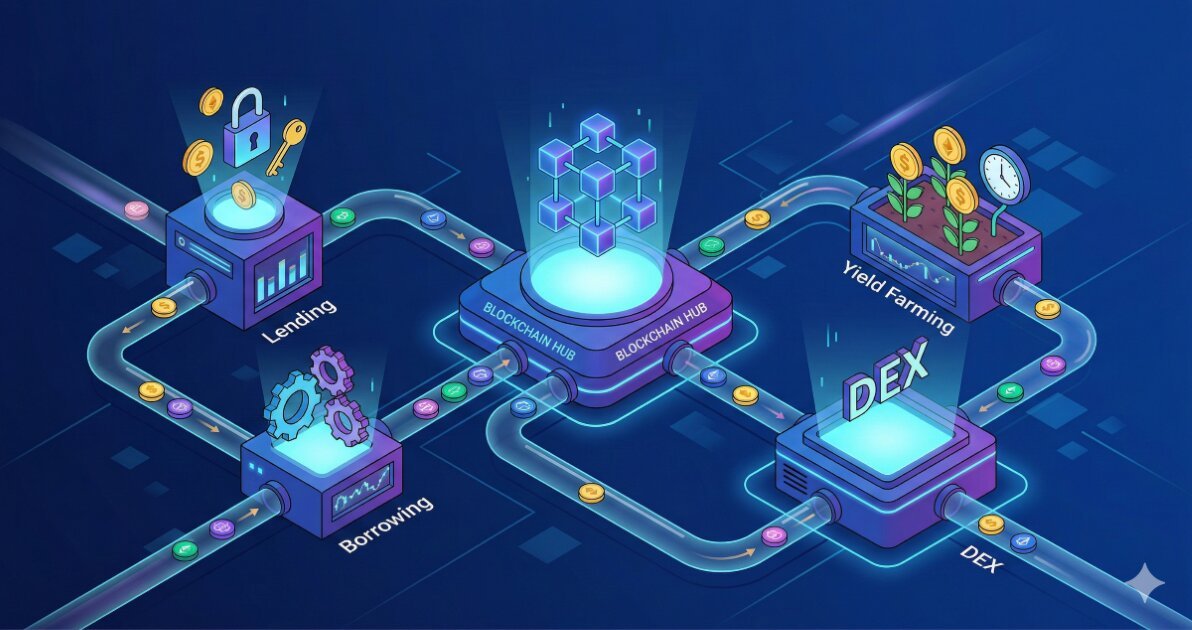
Ondo’s tokenized products often reach users through institutional vault structures rather than direct retail access. Protocols like Flux Finance and other lending markets integrate USDY as collateral, allowing users to deposit the yield bearing token and borrow against it.
The integration requires custom oracle adapters because standard Chainlink price feeds do not track these instruments. Vault contracts typically implement a rebasing model or wrapper that converts USDY’s yield accumulation into a standard ERC20 balance representation compatible with existing DeFi primitives.
When USDY is used as collateral, the liquidation logic must account for redemption delays. A vault cannot instantly convert USDY to stablecoins during a liquidation event. Some implementations hold a stablecoin buffer to handle immediate liquidations, then process USDY redemptions asynchronously to replenish reserves.
Worked Example: USDY Collateral Liquidation Path
A user deposits 100,000 USDY (worth $100,000 assuming $1 NAV) into a lending vault and borrows 70,000 USDC at 70% LTV. USDY accrues yield at approximately 5% APY, increasing the balance to 100,417 USDY after one month.
Market volatility causes the borrowed asset to appreciate against the user’s other holdings, and they fail to maintain the position. Their health factor drops below 1.0, triggering liquidation.
The vault contract:
- Calculates liquidation amount: 35,000 USDY (50% of position per vault rules)
- Checks stablecoin reserves in the liquidation buffer
- Finds only 20,000 USDC available for immediate payout to liquidator
- Transfers 20,000 USDC to liquidator, initiates USDY redemption for remaining 15,000
- Locks equivalent debt from being re borrowed until redemption settles
- Receives 15,000 USDC from Ondo custodian 1 to 2 days later
- Unlocks the reserved debt capacity
The liquidator receives partial immediate settlement and accepts delayed settlement for the remainder, typically at a discount to compensate for the timing risk.
Common Mistakes and Misconfigurations
-
Assuming instant liquidity: OUSG and USDY are not instantly redeemable onchain. Building applications that require immediate conversion to stablecoins will fail during redemption requests.
-
Ignoring transfer restrictions: Attempting to send tokenized products to non whitelisted addresses reverts. Integration contracts must be whitelisted before they can receive tokens, which requires coordination with Ondo compliance.
-
Using spot DEX pricing: No deep liquidity pools exist for these tokens. Do not rely on Uniswap or Curve pricing for valuation. Use NAV oracles or direct protocol queries.
-
Mismatching settlement assumptions: If your contract logic assumes T+0 settlement because it works with USDC, it will break when handling USDY redemptions that settle T+1 or T+2.
-
Overlooking compliance revocation: Whitelisted addresses can be removed. Smart contracts holding OUSG or USDY may lose transfer capability if compliance status changes.
-
Treating ONDO token yield as guaranteed: Fee distribution requires active governance votes. Staking does not automatically earn yield from protocol revenue unless distribution is explicitly enabled.
What to Verify Before Relying on This Architecture
- Current whitelist status of any integration contracts you control or interact with
- Active redemption windows and settlement timeframes for each tokenized product
- Whether ONDO staking is live and what the current fee distribution schedule specifies
- Custodian identity and any changes to the offchain settlement infrastructure
- Oracle implementations for any vaults or lending markets using OUSG or USDY as collateral
- Minimum redemption amounts and any redemption fees currently in effect
- Governance proposals that might alter fee switches or staking mechanics
- Regulatory status of the tokenized products in your jurisdiction
- Contract upgrade schedules or proxy admin controls that could change transfer restrictions
- Current NAV calculation methodology and update frequency for each product
Next Steps
- Review the Ondo smart contracts on Etherscan to understand the specific whitelist and transfer restriction implementation for products you plan to integrate.
- Test redemption flows on smaller amounts to measure actual settlement times under current market conditions before committing larger positions.
- Monitor governance forums for proposals affecting fee distribution or staking parameters if you hold ONDO tokens for yield purposes.
Category: Crypto News & Insights