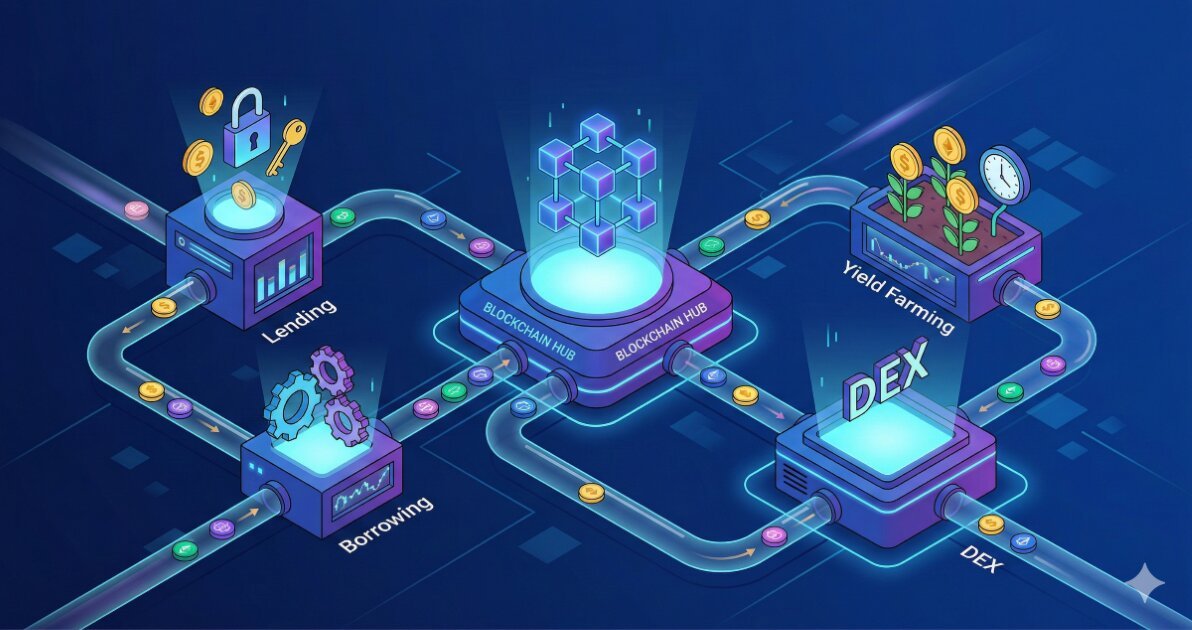
Off exchange crypto trading refers to any transfer or trade of digital assets that settles outside the order book and matching engine of a centralized exchange. This encompasses peer-to-peer transactions, OTC desk executions, atomic swaps, decentralized exchange protocols, and direct onchain settlement. Understanding these paths matters because they alter counterparty risk, price discovery, settlement finality, regulatory treatment, and slippage profiles compared to centralized venue execution.
This article covers the primary execution mechanisms, infrastructure requirements, and operational trade-offs practitioners face when routing flow offchain or outside traditional exchange rails.
Core Execution Mechanisms
Off exchange trades resolve through several distinct pathways.
OTC desk settlement involves negotiating price and size with a dealer who takes principal risk or acts as agent. The trade agreement occurs off exchange, often via encrypted chat or voice. Settlement may happen onchain via direct wallet transfer or through custodial book entry if both parties hold assets at the same institution. Desks typically serve block trades (often above $100,000 equivalent) where order book depth is insufficient or where the trader wants to avoid signaling intent publicly.
Peer-to-peer protocols match buyer and seller via escrow contracts or through reputation systems. Platforms like LocalBitcoins (historically) and P2P sections of certain platforms let users post offers and negotiate terms. Settlement depends on the platform design: some use multisignature escrow, others rely on onchain atomic swaps or custodial intermediaries who release funds after payment proof.
Decentralized exchange (DEX) protocols execute trades onchain via smart contracts. Automated market makers pool liquidity and price according to bonding curve formulas. Limit order book DEXs replicate traditional matching but settle each fill onchain. Both avoid a centralized operator holding user funds, though they introduce different trust assumptions around contract audits and oracle integrity.
Atomic swaps use hash time locked contracts to enable trustless exchange across chains. Each party locks funds in a contract that releases only when the counterparty reveals a secret or when a timeout expires. This removes intermediary risk but requires both blockchains to support the necessary scripting.
Infrastructure and Tooling Requirements
Executing off exchange requires different operational components than API trading on centralized venues.
Wallet infrastructure becomes critical. You need hot wallets for rapid settlement and cold storage for larger holdings. Key management, backup procedures, and hardware security modules enter the operational stack. Unlike exchange API keys, losing a private key means permanent loss of access.
Blockchain node access determines whether you verify settlement yourself or trust a third party indexer. Running full nodes for each asset you trade improves security and removes reliance on RPC providers, but adds hardware and maintenance overhead. Light clients and SPV proofs offer middle ground for some chains.
Price discovery tooling shifts from a single exchange feed to aggregation across multiple sources. OTC desks quote based on reference rates from liquid venues, adjusted for size and urgency. DEX aggregators query multiple liquidity pools and route splits to minimize slippage. Without centralized order books, determining fair value requires synthesizing data from venues with varying liquidity and fee structures.
Settlement monitoring replaces exchange confirmation APIs. You watch blockchain explorers or run indexers to detect incoming transfers, count confirmations, and flag reorgs. For EVM chains, monitoring pending transactions in the mempool provides early visibility but introduces complexity around gas price volatility and transaction replacement.
Counterparty and Settlement Risk Profiles
Off exchange trades redistribute risk compared to centralized matching.
OTC desks acting as principal absorb execution risk: they commit to a price before hedging. If markets move against them during settlement lag, the desk takes the loss. Desks mitigate this through bid-ask spreads and by limiting quote validity windows. For the client, the risk is delivery failure if the desk becomes insolvent between trade agreement and settlement. Using reputable desks with transparent capital backing and enforceable contracts reduces this exposure.
Peer-to-peer escrow models introduce smart contract risk. If the escrow logic contains a bug or the arbitration mechanism fails, funds may lock permanently. Atomic swaps remove custodial risk but require both parties to remain online during the multi-step protocol. A dropout before final settlement can strand funds in time locked contracts, though refund paths typically return capital after expiry.
DEX trades eliminate exchange custody risk but expose users to contract vulnerabilities, oracle manipulation, and front-running. Miners or validators can reorder transactions within a block to extract value from pending swaps. Slippage protection parameters define maximum acceptable price movement, but setting them too tight causes failed transactions that still consume gas fees.
Fee Structures and Economic Considerations
Off exchange execution costs differ structurally from exchange maker-taker schedules.
OTC desks embed compensation in the spread between their buy and sell quotes. Typical spreads range from 10 to 100 basis points depending on asset liquidity, trade size, and urgency. Large trades negotiated over time can achieve tighter pricing than instantly executable quotes. Some desks charge explicit commissions instead of or in addition to spread.
DEX protocols levy swap fees (commonly 0.05% to 0.30% per trade) that accrue to liquidity providers. Gas fees for onchain settlement add variable cost that spikes during network congestion. A complex swap routing through multiple pools incurs gas for each leg. Calculating total execution cost requires summing protocol fees, gas, and slippage.
Peer-to-peer platforms may charge listing fees, success fees, or subscription costs. Escrow services sometimes take a percentage of transaction value. Comparing total cost across mechanisms demands accounting for all fee layers plus the cost of capital tied up during settlement delays.
Worked Example: OTC Desk Block Trade
An institutional trader needs to purchase 50 BTC without moving the market. The trader contacts three OTC desks and requests quotes. Desk A offers 50 BTC at $41,250 per coin, valid for 60 seconds, settling via onchain transfer within two hours. Desk B quotes $41,230 with four hour settlement. Desk C offers $41,200 but requires the trader to hold funds in custody at the same institution for instant book entry settlement.
The trader accepts Desk B’s quote and signs a trade confirmation document specifying the exact amount, price, settlement address, and timeline. Desk B sends a deposit address. The trader wires fiat or transfers stablecoin collateral according to the desk’s terms. After confirming payment, Desk B broadcasts the BTC transaction from their treasury wallet to the trader’s cold storage address.
The trader monitors the blockchain for the incoming transaction. After six confirmations (roughly one hour), the trader considers settlement final and updates internal position records. Total execution cost includes the implicit spread between Desk B’s bid and the midpoint of liquid exchange order books at execution time, plus any wire fees or stablecoin gas costs for the collateral transfer.
Common Mistakes and Misconfigurations
- Insufficient confirmation depth: accepting fewer confirmations than the asset’s security model warrants exposes you to chain reorgs. Bitcoin’s six confirmations and Ethereum’s roughly 15 blocks represent community standards, not universal rules.
- Reusing deposit addresses: many OTC desks and P2P counterparties generate one-time addresses for each trade. Sending to an expired or reused address may result in unrecoverable loss if the recipient no longer monitors it.
- Ignoring gas price dynamics: submitting DEX transactions with default gas settings during congestion leads to hours-long pending states or transaction drops. Monitoring mempool and adjusting gas dynamically improves execution certainty.
- Skipping contract verification: trusting a DEX interface without independently verifying the contract address against official sources opens phishing vectors. Attackers clone interfaces and point them to malicious contracts.
- Underestimating slippage on thin liquidity: DEX aggregators show estimated output, but actual received amount depends on pool state at execution block. Large trades on low-liquidity pairs can experience double-digit slippage even with routing optimization.
- Neglecting legal documentation: OTC trades often involve contracts specifying dispute resolution and jurisdiction. Operating without signed agreements complicates recovery if settlement fails.
What to Verify Before You Rely on This
- Current liquidity depth of OTC desks you plan to use and their credit standing or insurance arrangements.
- Exact fee schedules and spread models for each execution pathway, as these vary with market conditions and relationship tier.
- Smart contract audit reports and historical exploit data for any DEX protocol you route through.
- Blockchain confirmation policies appropriate for the asset and transaction size you are settling.
- Regulatory classification of off exchange trades in your jurisdiction, as some regions treat OTC differently from exchange trades for tax and reporting.
- Wallet security practices including multisig thresholds, backup procedures, and incident response plans.
- Gas cost estimation tools and mempool monitoring services for chains where you settle.
- Counterparty identity verification and sanctions screening requirements if you operate under AML obligations.
- Insurance or recovery mechanisms available if settlement fails due to technical or counterparty issues.
- Latest protocol versions and any pending upgrades that might affect settlement mechanics or fee structures.
Next Steps
- Establish relationships with multiple OTC desks to compare pricing and test settlement procedures with small trades before routing significant size.
- Deploy monitoring infrastructure that tracks onchain settlement in real time and alerts on confirmation delays or unexpected transaction behavior.
- Document internal procedures for each execution pathway including fallback options if primary routes become unavailable during volatile periods.
Category: Crypto Trading