Illinois residents face a layered compliance environment when selecting crypto exchanges. The state does not impose a separate licensing regime for crypto spot trading platforms, but exchanges must register as money transmitters with the Illinois Department of Financial and Professional Regulation (IDFPR) if they custody funds. Federal FinCEN registration and state money transmission laws combine to shape which platforms serve Illinois users and how they structure custody, fiat onramps, and withdrawal flows.
This article covers the technical and regulatory factors that determine platform availability in Illinois, compares custody and execution architectures across centralized and noncustodial options, and provides a decision framework for practitioners evaluating counterparty risk, order routing, and withdrawal mechanics.
Regulatory Framework and Platform Availability
Exchanges serving Illinois must register as money transmitters under the Illinois Transmitters of Money Act if they take custody of user funds or fiat currency. This requirement applies to centralized exchanges that hold customer assets in omnibus wallets. Federal AML obligations under the Bank Secrecy Act add KYC requirements that all compliant platforms enforce at onboarding.
Not all exchanges maintain Illinois registration. Some platforms geofence Illinois IP addresses or block new account creation from Illinois mailing addresses due to the cost of state money transmitter compliance. Before committing assets, verify the exchange maintains an active Illinois money transmitter license. The IDFPR publishes a searchable licensee database. Unlicensed platforms may halt withdrawals or freeze accounts if they discover Illinois residency after registration.
Noncustodial decentralized exchanges bypass money transmission requirements because they do not hold user funds. Uniswap, dYdX, and similar protocols execute trades through smart contracts that settle directly between user wallets. Illinois law does not currently regulate wallet software or direct peer to peer settlement, though federal securities and commodities regulations may still apply depending on the asset.
Custody Architecture and Withdrawal Mechanics
Centralized exchanges use omnibus hot and cold wallet structures. Customer deposits flow into pooled wallets where the exchange tracks internal balances in a database. When you execute a trade, no onchain transaction occurs. The exchange updates its ledger and nets trades across all users. Withdrawals trigger onchain transfers from the omnibus wallet to your external address.
This architecture introduces counterparty risk. You rely on the exchange to maintain reserve solvency and operational security. FTX and similar collapses demonstrated that internal accounting can diverge from actual reserves. Before depositing large amounts, check whether the exchange publishes proof of reserves attestations and whether those attestations cover all asset types. Merkle tree proofs allow you to verify your balance appears in the attested dataset without revealing other customer data.
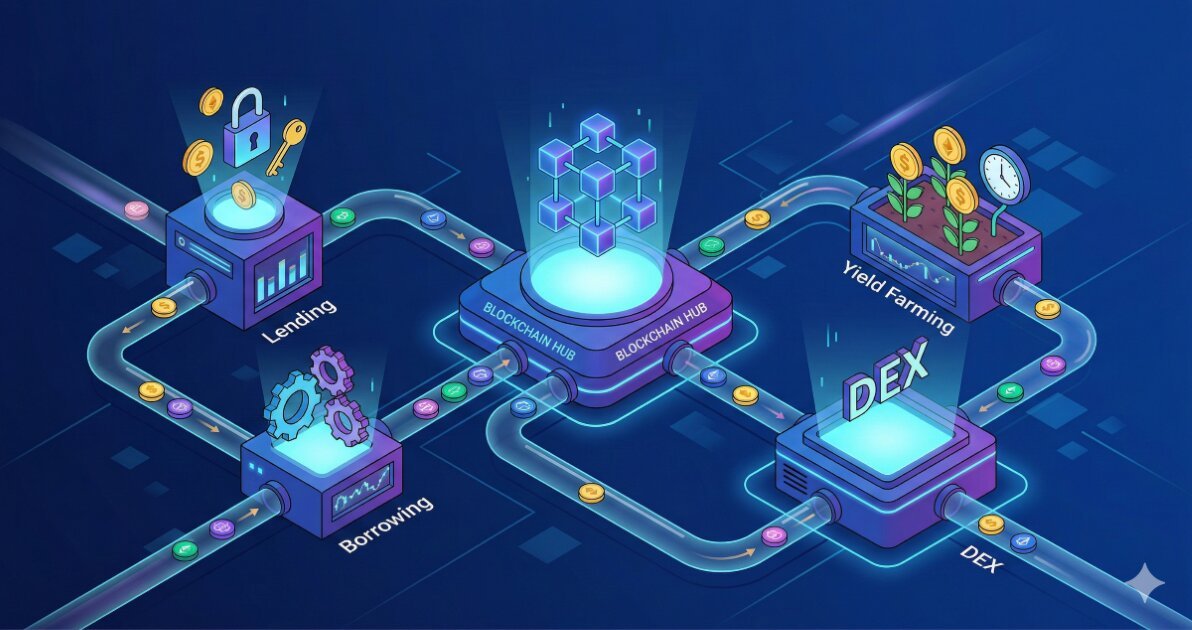
Noncustodial exchanges eliminate custody risk by settling trades onchain through smart contracts. You connect a wallet like MetaMask or Ledger, sign a transaction approving the contract to move tokens from your address, and the swap executes atomically. The contract either completes the full trade or reverts, preventing partial fills from leaving you exposed. Gas fees and slippage become your primary costs rather than withdrawal fees and custodial risk.
Hybrid models exist. Some platforms let you trade from a noncustodial wallet while routing orders through centralized matching engines. These systems batch trades offchain and settle net positions onchain periodically, reducing gas costs while preserving self custody between settlement windows.
Order Execution and Liquidity Routing
Centralized exchanges use order book matching engines that pair limit orders by price and time priority. When you place a market order, the engine matches against the best available limit orders until your quantity fills. Deep order books reduce slippage, but thinly traded pairs may experience significant price impact on larger trades.
Some platforms route retail orders through market makers rather than displaying them in the public order book. This payment for order flow model can improve fill quality for small trades because market makers internalize the spread. For large orders, direct market access to the order book often yields better execution because you can place iceberg orders or use TWAP algorithms to reduce market impact.
Decentralized exchanges use automated market maker (AMM) designs. Liquidity providers deposit token pairs into pools, and a bonding curve formula determines swap prices based on pool reserves. The constant product formula x times y equals k means larger trades relative to pool size cause exponential price impact. Before executing significant swaps on an AMM, calculate expected slippage using the pool reserves visible onchain. Some aggregators like 1inch split orders across multiple pools to minimize slippage.
Fiat Onramp Options and Settlement Times
Illinois residents need compliant fiat onramps to move USD into crypto. Most centralized exchanges support ACH transfers, wire deposits, and debit card purchases. ACH transfers take three to five business days to clear and often carry lower fees than instant debit card purchases. Wire transfers settle same day but may incur $25 to $50 fees depending on your bank.
Exchanges impose holding periods on assets purchased with ACH funds to mitigate chargeback risk. Typical holds range from five to ten days. During the hold, you can trade the assets for other cryptocurrencies but cannot withdraw to an external wallet. Wire deposits and debit purchases usually avoid holds because those payment methods carry lower reversal risk.
Some platforms restrict certain fiat pairs for Illinois users due to state specific money transmission requirements. If you need to trade a less common stablecoin or fiat pair, confirm the exchange supports that pair for Illinois accounts before depositing funds.
Noncustodial exchanges require you to acquire crypto through a separate onramp before trading. Ramp networks like Wyre or Ramp integrate with noncustodial wallets to provide direct fiat to crypto purchases, but these services also geofence based on state regulations and may not serve all Illinois addresses.
Worked Example: Evaluating a Large Limit Order
You want to buy 10 BTC using a centralized exchange with an Illinois money transmitter license. The current order book shows 3 BTC offered at $40,000, 4 BTC at $40,025, and 5 BTC at $40,050.
Placing a market order would execute across all three levels, resulting in an average fill price of approximately $40,029 excluding fees. Total cost would be $400,290 plus trading fees, typically 0.1% to 0.5% depending on your volume tier.
Instead, you place a limit order at $40,020, between the first and second price levels. This order rests in the book until sellers hit your bid or the market moves down. If the order fills completely, you save approximately $90 compared to the immediate market order, but you accept execution risk if the price moves away before filling.
For a trade this size, verify the exchange maintains proof of reserves covering at least your post trade BTC balance. If the attestation shows reserve ratios below 100%, consider splitting the purchase across multiple platforms or withdrawing to cold storage immediately after settlement.
Common Mistakes and Misconfigurations
- Assuming Illinois registration based on general US availability. Some platforms distinguish between state licenses and may restrict features for Illinois accounts even if they allow registration.
- Ignoring withdrawal holds on ACH funded purchases. Attempting to withdraw before the hold expires triggers an error and may flag your account for review.
- Using market orders on thinly traded pairs without checking order book depth. Price impact can exceed 5% on pairs with less than $100,000 daily volume.
- Storing large balances on centralized exchanges long term. Counterparty risk persists even with proof of reserves. Withdraw to hardware wallets for amounts you do not plan to trade actively.
- Overlooking gas fees when using noncustodial exchanges during network congestion. Ethereum gas prices can exceed $50 per swap during peak usage, making small trades uneconomical.
- Failing to verify smart contract approvals before signing transactions on decentralized exchanges. Unlimited approvals let the contract move any amount of that token from your wallet in future transactions.
What to Verify Before Relying on This
- Current Illinois money transmitter license status in the IDFPR database for any centralized exchange you plan to use.
- Whether the platform geofences Illinois IPs or addresses for new accounts or specific trading pairs.
- Proof of reserves publication frequency and methodology. Verify whether attestations cover all asset types or only major coins.
- Withdrawal fee schedules and minimum withdrawal amounts. Some platforms charge flat fees that make small withdrawals inefficient.
- ACH hold duration for your account tier. Higher verification levels or trading history may reduce hold periods.
- Gas fee levels on Ethereum or other networks before executing noncustodial trades. Use gas trackers to identify lower cost time windows.
- Smart contract audit reports for any decentralized exchange you use. Unaudited contracts carry exploit risk that can drain liquidity pools.
- Whether your intended trading pairs have sufficient liquidity. Check 24 hour volume and order book depth for pairs you plan to trade frequently.
- Margin and derivatives availability. Illinois regulations may restrict leveraged products differently than spot trading.
Next Steps
- Cross reference exchange availability against the IDFPR money transmitter licensee list and verify each platform explicitly serves Illinois residents for your intended trading pairs.
- Test small deposits and withdrawals on any new platform before committing significant capital. Verify ACH hold durations and withdrawal processing times match published policies.
- Set up hardware wallet cold storage for any balance you do not plan to trade within the next 30 days. Practice the withdrawal and storage process with a test amount first.
Category: Crypto Exchanges