No KYC crypto exchanges allow trading without identity verification, prioritizing pseudonymity over regulatory compliance. They serve users in jurisdictions with restrictive banking access, privacy advocates, and traders seeking rapid onboarding. This article examines the technical and operational characteristics that differentiate no KYC platforms, the structural trade-offs they impose, and the verification steps required before committing funds.
Architectural Models and Withdrawal Thresholds
No KYC exchanges cluster into three operational models. Pure noncustodial platforms (decentralized exchanges like Uniswap or PancakeSwap) require no account creation; users connect a wallet, sign transactions onchain, and settle via smart contracts. These platforms impose no withdrawal limits because they never custody assets.
Custodial exchanges with tiered KYC offer limited functionality to unverified accounts. Users can deposit, trade, and withdraw up to a threshold (commonly 1 to 2 BTC equivalent per 24 hour period, though this varies by platform and changes frequently). Exceeding the limit triggers mandatory verification. Platforms in this category include several offshore exchanges that serve non US markets.
Fully anonymous custodial platforms accept deposits and facilitate trades without any identity collection. These operate in regulatory grey zones or explicitly non compliant jurisdictions. Withdrawal limits, if present, exist to manage liquidity risk rather than satisfy reporting obligations.
Liquidity and Execution Quality
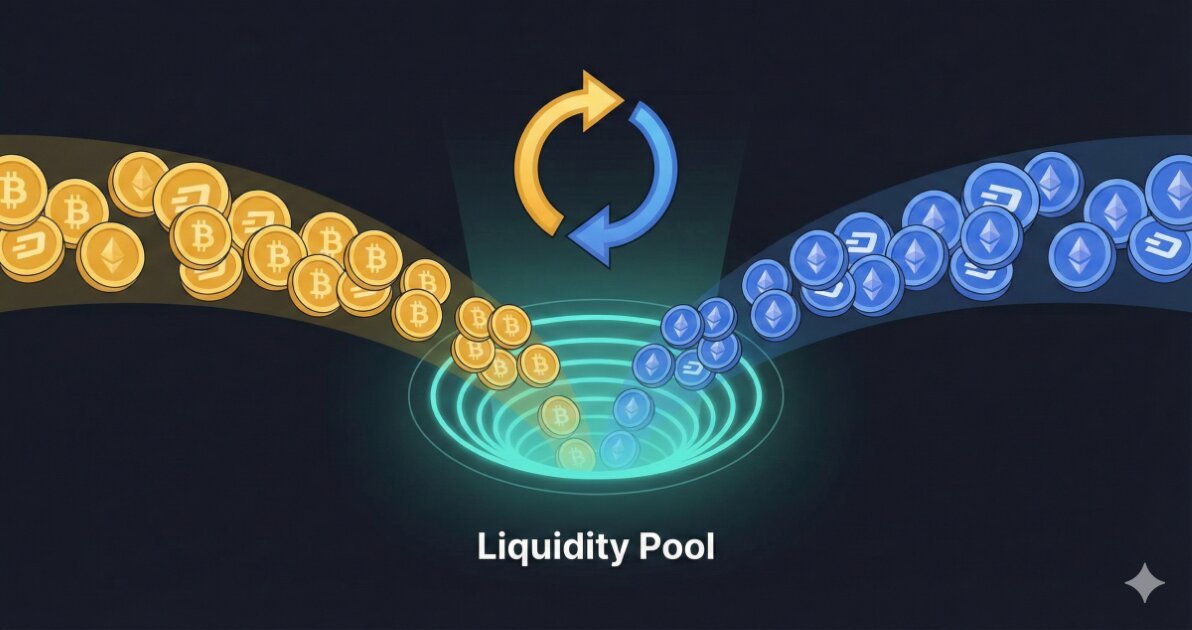
No KYC platforms generally offer narrower spreads and deeper order books for major pairs (BTC/USDT, ETH/USDT) than for altcoins. Decentralized exchanges derive liquidity from automated market maker pools funded by liquidity providers. Slippage on these platforms depends on pool depth and transaction size. A 10 ETH swap against a pool holding 500 ETH might incur 2% slippage, while the same swap against a 5,000 ETH pool might cost 0.2%. Check current pool reserves in the protocol interface before executing large orders.
Custodial no KYC exchanges rely on their own order books or aggregate liquidity from multiple sources. Smaller platforms may exhibit wide spreads outside BTC and ETH pairs. Compare the effective rate (accounting for fees and spread) across platforms before routing significant volume.
Fee Structures and Hidden Costs
Decentralized exchanges charge protocol fees (typically 0.25% to 0.3% per swap) plus network gas fees. Gas costs fluctuate with network congestion; a simple Ethereum swap might cost $5 during low activity or $50 during peak demand. Layer 2 solutions (Arbitrum, Optimism) and alternative chains (BSC, Polygon) reduce gas fees to under $1 in many cases, but introduce crosschain bridge risk.
Custodial no KYC platforms often apply higher trading fees than their KYC counterparts to offset regulatory and operational risk. Maker/taker fees in the range of 0.1% to 0.5% are common, with volume discounts rare or nonexistent. Deposit fees are typically waived, but withdrawal fees can exceed network costs by 50% to 200%, functioning as a revenue mechanism.
Some platforms impose dynamic withdrawal fees that increase during periods of high demand or when the platform experiences liquidity stress. Monitor fee schedules before initiating withdrawals, especially for less liquid assets.
Custody and Counterparty Risk
Noncustodial platforms eliminate exchange default risk because users retain private key control throughout the transaction. The risk surface shifts to smart contract exploits, frontend spoofing, and wallet security. Review contract audits and check for historical exploits before interacting with a new protocol.
Custodial no KYC exchanges present unmitigated counterparty risk. These platforms rarely publish proof of reserves, maintain insurance funds, or undergo third party audits. Exit scams, insolvency due to mismanagement, and forced closures following regulatory action have occurred across multiple platforms. Treat any custodial no KYC exchange as having a nonzero probability of total fund loss. Limit exposure to amounts you can afford to lose and withdraw to self custody immediately after trading.
Regulatory and Jurisdictional Considerations
No KYC exchanges operate in jurisdictions with minimal crypto oversight or function as unlicensed entities. Regulatory crackdowns have led to abrupt service terminations, asset freezes, and platform migrations. Users in certain countries may find themselves geofenced without notice.
Access methods vary. Some platforms block IP addresses from specific regions; VPN usage may violate terms of service and provide grounds for fund seizure, though enforcement is inconsistent. Others impose no geographic restrictions but disclaim liability for user compliance with local laws.
Understand your own jurisdiction’s requirements. In many regions, the obligation to report crypto gains and declare foreign financial accounts rests with the user regardless of whether the exchange collects identification. No KYC does not confer tax exemption.
Worked Example: Routing a Privacy Focused Trade
A user holds 5 ETH in a hardware wallet and wants to acquire 0.2 BTC while minimizing identity exposure.
Option A: Decentralized exchange. Connect wallet to Uniswap, swap ETH for WBTC, then bridge WBTC to native BTC via a service like RenBridge or withdraw to a crosschain wallet. Total cost: 0.3% swap fee plus ~$15 gas (Ethereum mainnet) or $1 (Arbitrum), plus bridge fees of approximately 0.1% to 0.2%. Settlement is immediate onchain. Risk includes smart contract exploit and bridge validator set trust assumptions.
Option B: Custodial no KYC exchange. Deposit 5 ETH to an exchange offering unverified withdrawals up to 2 BTC per day. Execute market order for BTC/ETH pair. Withdraw BTC to personal wallet. Total cost: deposit (free), trading fee (0.2%), withdrawal fee (0.0005 BTC flat fee). Settlement depends on exchange processing times, typically 10 minutes to several hours. Risk includes exchange insolvency during the custody period.
The user selects Option A for larger amounts where counterparty risk outweighs gas costs, and Option B for smaller trades where fixed gas fees erode returns.
Common Mistakes and Misconfigurations
- Assuming withdrawal limits are static. Platforms adjust thresholds in response to regulatory pressure or operational changes. A 2 BTC daily limit can drop to 0.5 BTC or disappear entirely with no advance notice.
- Ignoring onchain confirmations required for deposits. Some exchanges require 12+ confirmations for BTC deposits, delaying availability by two hours. Others credit after three confirmations. Confirm requirements before depositing if you need immediate liquidity.
- Executing large swaps on thin DEX pools. Slippage can exceed 5% on illiquid pairs. Set maximum slippage tolerance in the interface (1% to 2% for most cases) to prevent execution at unfavorable rates.
- Reusing deposit addresses across sessions. Some custodial exchanges generate new deposit addresses per session. Sending funds to an expired address may result in permanent loss or require manual recovery intervention.
- Failing to test withdrawal processing with a small amount. Before moving significant value, withdraw a trivial sum (0.001 BTC) to confirm the platform processes requests and that you control the destination address.
- Trusting platform uptime during volatility. No KYC exchanges have suspended withdrawals during sharp market moves, either due to technical failures or deliberate liquidity preservation. Maintain access to alternative platforms for exit opportunities.
What to Verify Before Committing Funds
- Current withdrawal limits for unverified accounts and whether limits apply per transaction or per rolling 24 hour window
- Minimum withdrawal amounts, which can trap small balances if set above the amount you hold
- Which assets are enabled for deposit and withdrawal (platforms frequently delist low volume pairs)
- Network fee structures for your intended withdrawal chain (ERC-20 vs native, Layer 1 vs Layer 2)
- Whether the platform has experienced recent security incidents, regulatory actions, or leadership changes
- Availability of customer support channels and median response times for withdrawal issues
- Geographic restrictions and whether your access method (residential IP, VPN, Tor) is explicitly prohibited
- Current smart contract audit status and bug bounty programs for decentralized platforms
- Proof of reserves or transparency reports, if available (rare among no KYC platforms)
- Recent user reports on withdrawal processing times, particularly for your target asset
Next Steps
- Set up a dedicated wallet for no KYC exchange interactions, separate from your primary holdings, to limit exposure if the platform is compromised.
- Benchmark effective rates across three platforms (one DEX, two custodial) for your intended trade pair to establish pricing baselines.
- Execute a small test cycle (deposit, trade, withdraw) with an amount you can afford to lose entirely, measuring total time from deposit to final withdrawal confirmation.
Category: Crypto Exchanges